MAMMA MIA!
For the first time in Lithuania, the world-famous hit musical “Mamma Mia!” has been staged. It is an extraordinarily human story born from the lyrics of the legendary band ABBA and the vision of one woman.
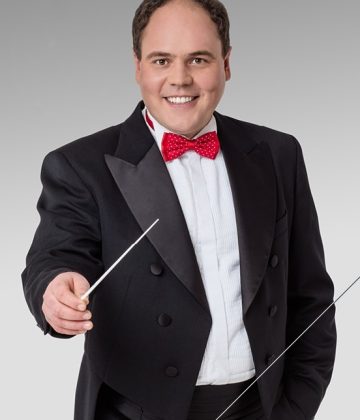
Leonard Charl Prinsloo, director: “People have fallen in love with the musical ‘Mamma Mia!’ because it is full of the joy of life. This music inspires you to live.”
Mamma Mia! began with the vision of British producer Judy Craymer. As a devoted fan of the legendary Swedish pop group, she came up with the idea of creating a musical based on their popular songs. “I just felt that ABBA’s songs tell a story. You could feel everyday life in them,” she said.
ABBA conquered the world in 1974 after winning the Eurovision Song Contest (band members: Agnetha Fältskog, Björn Ulvaeus, Benny Andersson, Anni-Frid Lyngstad). Having sold over 300 million albums and singles, the group laid the foundation for the billion-dollar Mamma Mia! franchise. The musical’s score is made up of hits by Benny Andersson and Björn Ulvaeus: “Super Trouper,” “Dancing Queen,” “Take a Chance on Me,” “Thank You for the Music,” “Money, Money, Money,” and, of course, “Mamma Mia.”
The songwriters did not immediately agree to collaborate on the stage production. “I thought ABBA was dead, forgotten, like many other bands of that era. In the 1980s, ABBA was viewed quite unfavorably,” said Björn Ulvaeus. Judy Craymer recalled that it took a long time to convince Benny and Björn: “They no longer considered themselves pop stars and had left ABBA in the past. After the group broke up, everyone was convinced that no one would listen to their songs anymore.”
The libretto was written, at Craymer’s request, by British playwright, film, and television screenwriter Catherine Johnson. “I was completely unknown and had no money, so it wasn’t like I was visiting famous writers and directors. At the time, I could only afford the train fare from Bristol for the writer, and the remaining money was enough for just a sandwich and a pint of beer,” Craymer recalled about the beginning of the creative process.
The musical Mamma Mia! speaks about the power of women, freedom of self-expression, and human weaknesses. ABBA’s lyrics are incredibly open and sensitive, reflecting human experiences: the passage of time, falling in love, marriage, motherhood, loss, and relationship breakdowns. Early, more youthful songs about love, such as “Honey, Honey,” and later songs about fading love inspired a story about two generations of women. “I raised two children on my own, so I knew I wanted to write about a single mother and her daughter,” said screenwriter Catherine Johnson.
The musical premiered in 1999 at the Prince Edward Theatre in London’s West End. Later, the story took on a new form—transforming from a stage production into a film adaptation. In 2008, the film Mamma Mia! was released, featuring a top-tier cast: Meryl Streep, Pierce Brosnan, Colin Firth, Stellan Skarsgård, Amanda Seyfried, and Christine Baranski. The success of Mamma Mia! exceeded all expectations. The globally successful musical has captivated more than 70 million people worldwide. The film Mamma Mia! received nominations for the Golden Globe, Grammy, and BAFTA awards. It is the longest-running “jukebox” musical of all time.
ABOUT THE CREATOR
Judy Craymer, the creator and producer of Mamma Mia!, has produced 50 productions of the musical in 16 languages across more than 440 cities worldwide. Ten years after the Mamma Mia! film grossed over $600 million, she produced a second original musical film based on ABBA songs, Mamma Mia! Here We Go Again. The film premiered in 2018 and became the most successful live-action musical sequel of all time, grossing nearly $400 million.
In 2002, Craymer received the “Woman of the Year” award for the international success of Mamma Mia!. In 2007, she was honored with the Order of the British Empire for her contributions to the music industry. In 2008, she received the Women in Film ITV Achievement Award and was also nominated for the BAFTA Carl Foreman Award.
Creator of the idea – Judy Craymer
Libretto author – Catherine Johnson
Music – Benny Andersson and Björn Ulvaeus
Lithuanian translation of the musical lyrics – Virginijus Pupšys